Resident Reports Strong Recovery And Refuses Former Partner Re-Entry
A local resident who initially feared she would not cope following a relationship breakdown now reports a full personal recovery, and has confirmed that the former partner who returned expecting to be admitted was not let through the door.
News Intro
A local resident has reported a complete personal recovery in the months following the end of a long-term relationship, and has confirmed that when her former partner returned to the property expecting to be admitted, she declined to let him in.
According to neighbours, the breakdown was initially difficult. In the immediate aftermath the resident is understood to have been afraid, and to have spent a period of time questioning whether she could continue without the other party present in the home. Several people in the area report that she was, by her own description, "petrified."
That period has since passed. Friends describe a marked and sustained improvement. The resident is said to have resumed sleeping normally, regained her composure, and reorganised the household to suit a single occupant. By the time the former partner returned, the recovery was, by all accounts, well established.
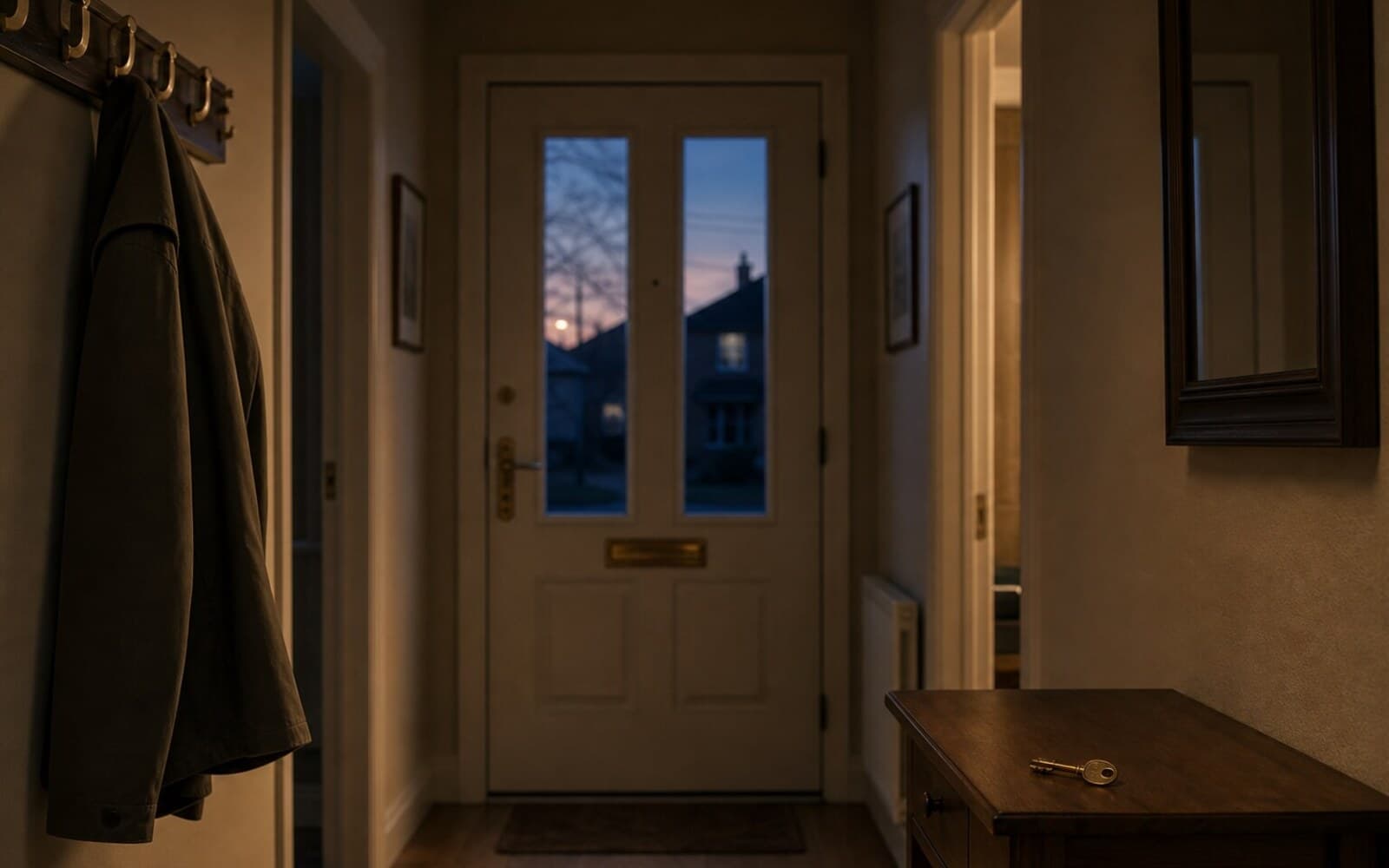
The return itself was brief. The former partner is reported to have arrived at the property and waited at the door in the expectation of being let back in. He was not. The resident is understood to have addressed him through the doorway, informed him that she had moved on, and asked him to leave.
She has since maintained that she will, in fact, survive.
The Resident's Account
I was upset for one evening and then I simply got better
People can put their minds at rest, because I am doing extremely well.
When it first happened I will admit I was frightened. I genuinely thought I would not be able to cope without him in the house. I remember standing in the hallway thinking I would never manage on my own. That feeling lasted, I would estimate, one night.
Then I thought about it properly and realised I had been keeping the household running the entire time anyway. So I held my head up high, and I carried on.
I changed a few things. I learned how to do the things he used to do, which turned out to be not very many things. I redecorated the spare room. I started going out again. I am, if anything, busier than before.
So you can imagine my surprise when I opened the door one evening and found him standing there, looking very sad, fully expecting to walk straight back in as though nothing had happened.
I'll be honest, my first thought was that he should have called ahead.
I did not let him in. I told him, very clearly, that he was not welcome, and that he should go. I do not think I was unkind about it. I simply pointed out that he was no longer the person living here, and asked him to turn around and leave.
He seemed to think the fact that he had come back was, in itself, the plan. It was not part of my plan.
I want it on the record that I am fine. More than fine. I have the whole rest of my life to get on with, and I intend to.
Community Wellbeing Review
What is notable here is the speed and completeness of the adjustment. An initial period of fear is an entirely normal response to a sudden change in living arrangements. What we would hope to see is exactly what appears to have happened: the fear is processed, the individual re-establishes a sense of agency, and the household stabilises around its remaining occupant. The refusal at the door is not bitterness. It is a boundary, calmly enforced.
From a transition standpoint this is a textbook recovery. The resident absorbed the initial shock, took ownership of the functions that had previously been delegated, and then declined to reverse a change she had already successfully implemented. The returning party arrived with no new proposal — simply the assumption that the previous arrangement could be reinstated on request. That is not a re-entry plan. That is a hope.
The household is understood to be operating without disruption.
Property Matters
My interest is purely in the access question. If the former partner retained a key, the resident would have been within her rights to change the locks, and from a loss-adjustment perspective I would strongly have advised it. As it stands, the resident answered the door, assessed the situation, and chose not to admit the caller. No forced entry, no loss to the property, no claim arising. From where I sit it is one of the cleaner outcomes I have reviewed.
Reader Reaction
u/Hallway_Standing_42 · 31288 points · 6h ago
"That feeling lasted, I would estimate, one night" is the most efficient recovery I have ever read about
u/Front_Door_Diplomacy · 24190 points · 6h ago
He really turned up with no plan beyond "I am here now" and expected that to work
u/Spare_Key_Energy_07 · 19770 points · 6h ago
INFO: did he genuinely think the door would just open. like was that the whole strategy
u/Redecorated_The_Spare_Room · 15602 points · 6h ago
The bit where she learned to do all his jobs and discovered there were almost none of them. devastating and I'm here for it
u/Held_Her_Head_Up_High · 11044 points · 6h ago
"He should have called ahead" is a sentence I will be thinking about for the rest of the week
Community Poll
Community Poll
Latest reader breakdown
Was the resident right not to let the former partner back in?
Topics